

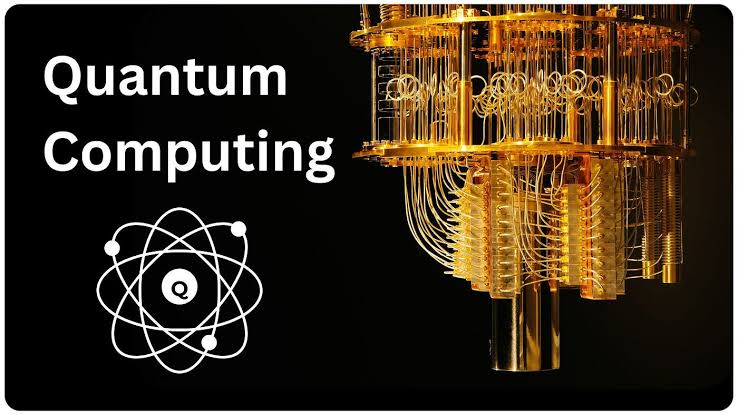
Quantum computing is an emerging field of technology that leverages the principles of quantum mechanics to process information in fundamentally different ways from classical computers. While traditional computers use bits that represent either 0 or 1, quantum computers use quantum bits, or qubits, which can exist in multiple states at the same time due to a property called superposition. This allows quantum systems to perform complex calculations at speeds that are impractical for conventional machines.
Another key principle is entanglement, where qubits become interconnected in such a way that the state of one qubit instantly influences another, no matter the distance between them. This property enables quantum computers to process large amounts of information in parallel, making them especially powerful for solving certain types of problems.
Quantum computing has the potential to revolutionize many industries. In medicine, it could accelerate drug discovery by simulating molecular structures with high accuracy. In cybersecurity, it could both challenge existing encryption methods and lead to the development of more secure cryptographic systems. In logistics and finance, quantum algorithms may optimize complex systems such as supply chains and investment portfolios far more efficiently than current methods.
However, quantum computing is still in its early stages. Building stable qubits is extremely difficult because they are highly sensitive to environmental noise, a problem known as decoherence. Researchers around the world are working on improving hardware stability, error correction, and scalable quantum architectures.
Companies like IBM, Google, and several startups are actively developing quantum processors, and governments are investing heavily in research. Although practical, large-scale quantum computers are not yet widely available, progress is rapid.
In conclusion, quantum computing represents a major shift in how information will be processed in the future. While it may take years to fully mature, its potential impact on science, industry, and society is immense, making it one of the most exciting areas of modern technology.
Technology / Quantum Computing
Quantum Computing: The Future of Super-Fast Processing Power
Quantum computing uses qubits and quantum physics to solve complex problems faster than traditional computers.

Key Takeaways
- Apply what you've learned during your next Tutnect session for better, faster results.
- Bookmark this article and revisit it as a quick reference whenever you need a refresher.
- Share it with a fellow student or tutor who might benefit from these insights.